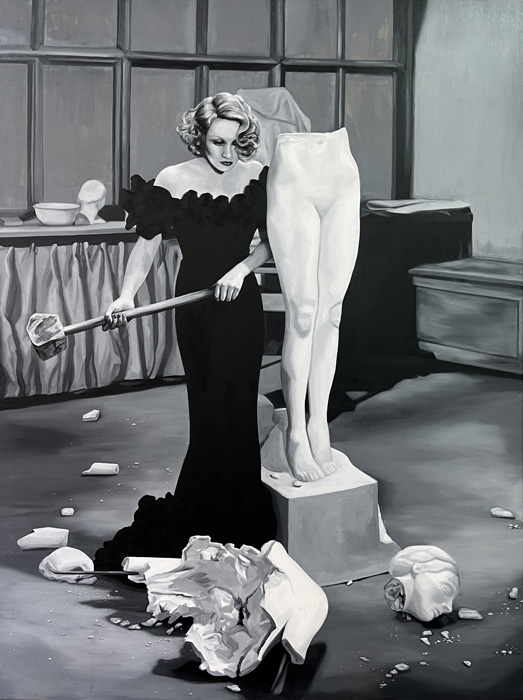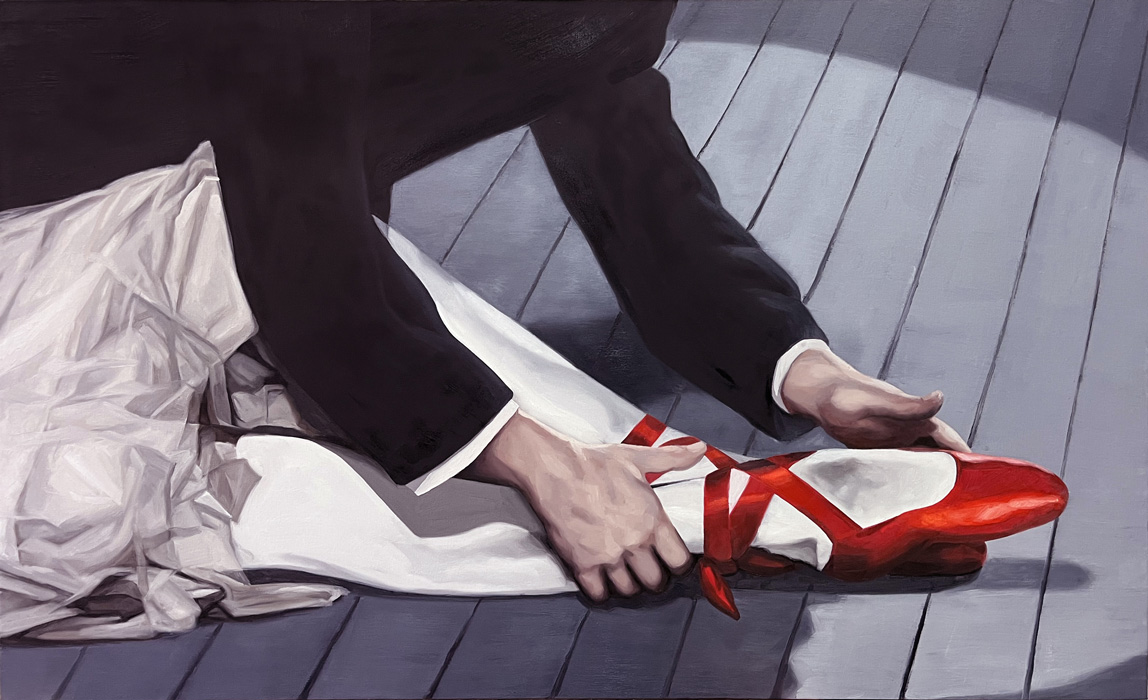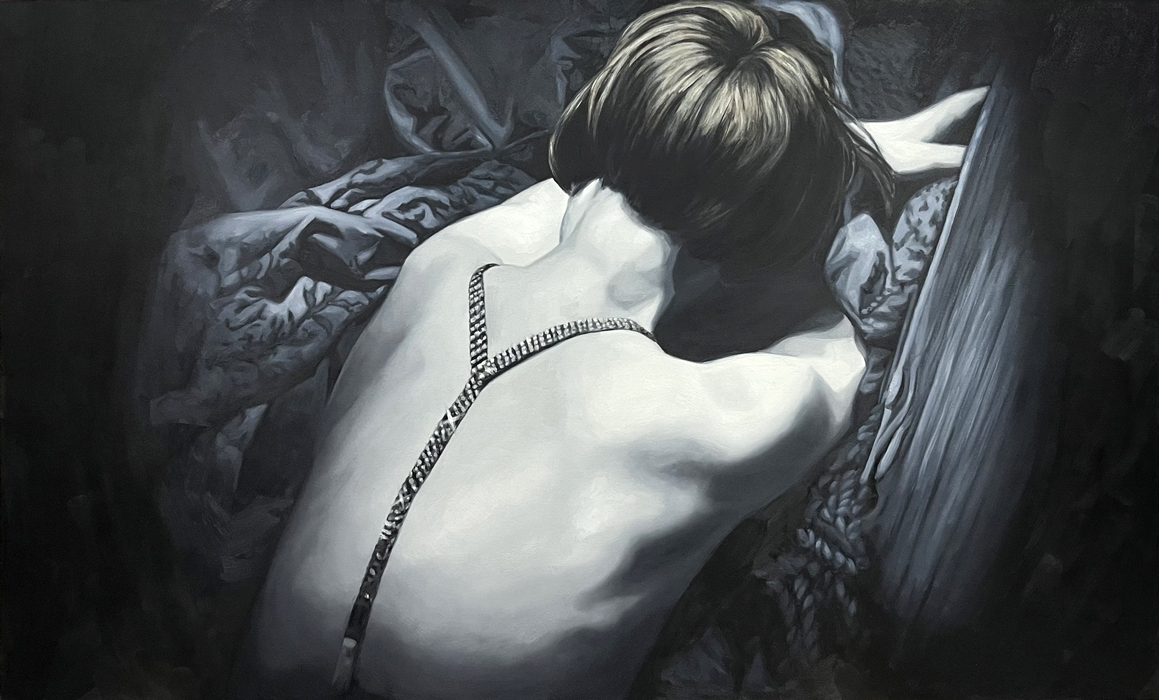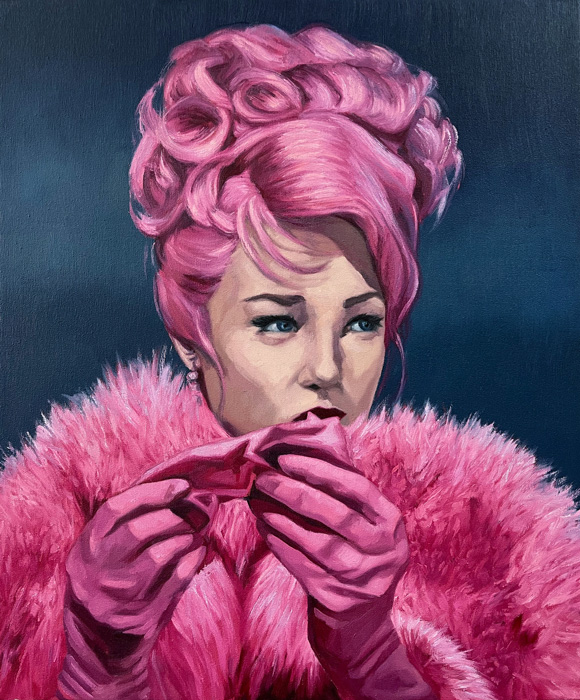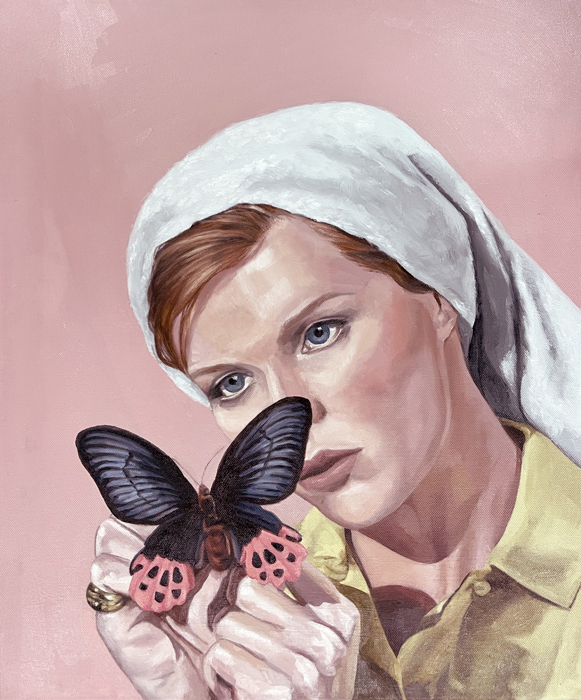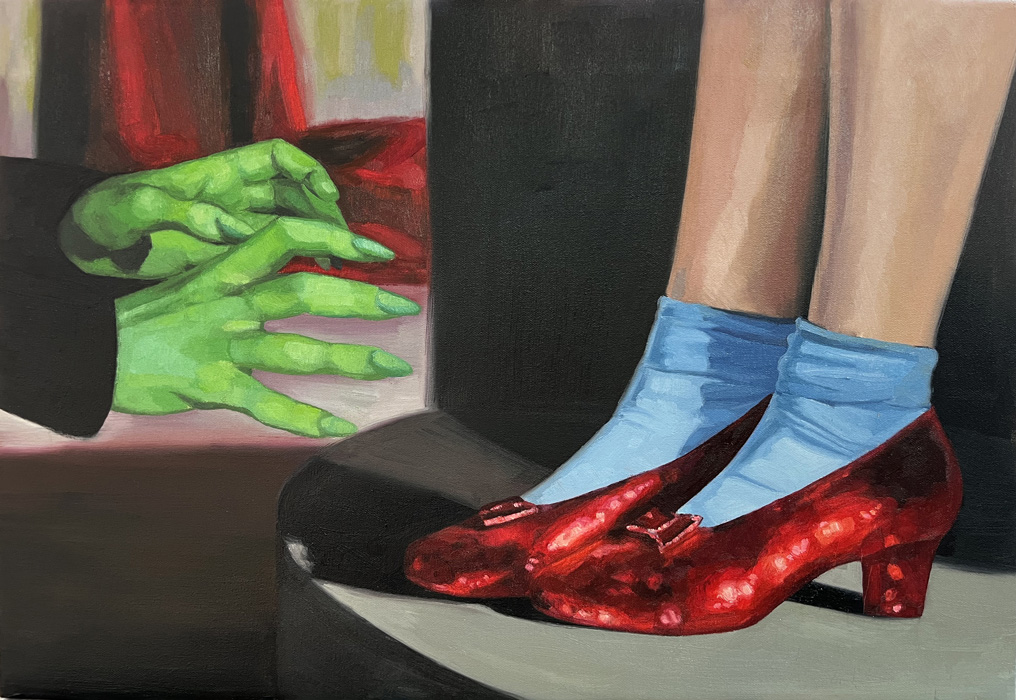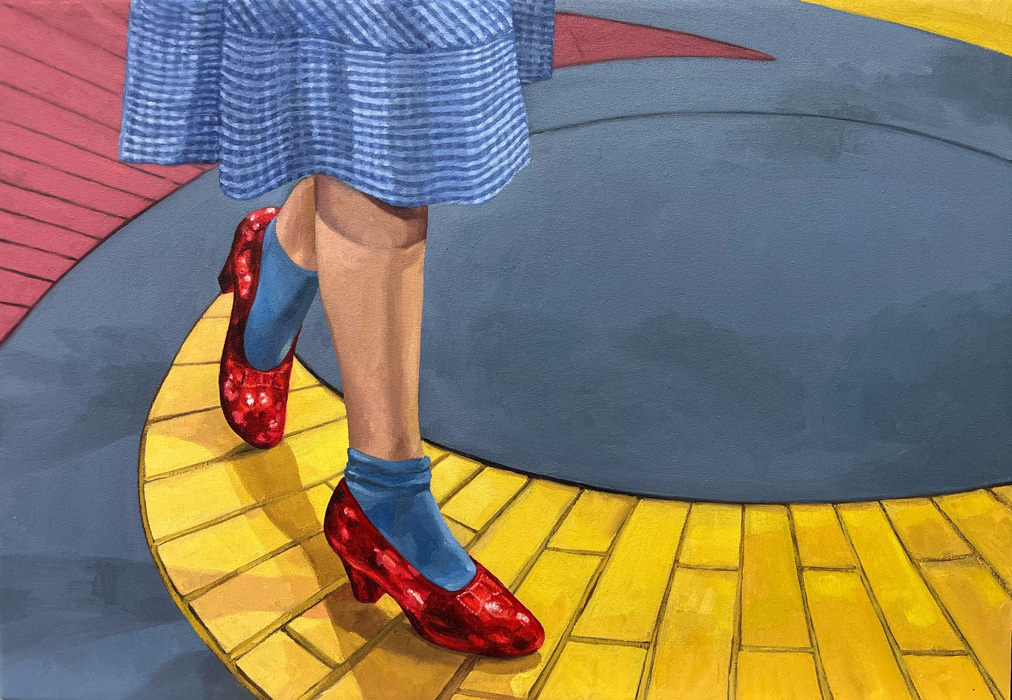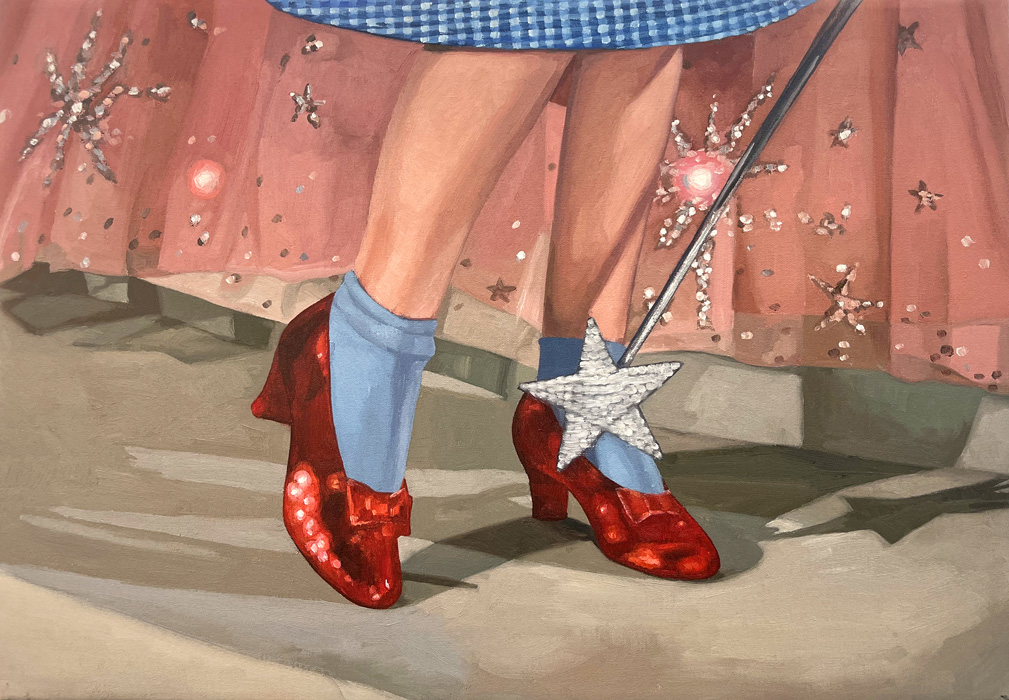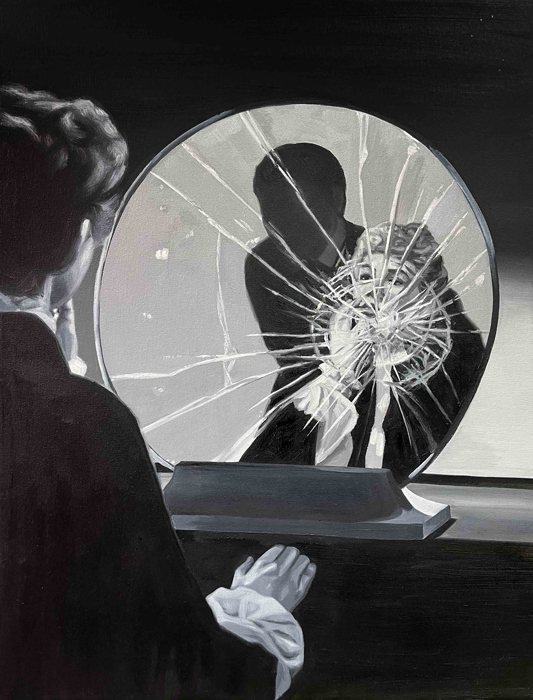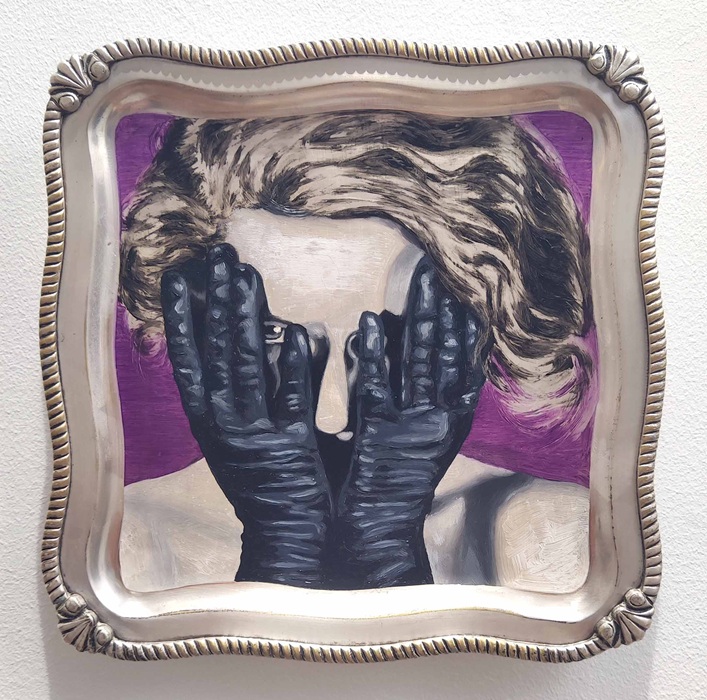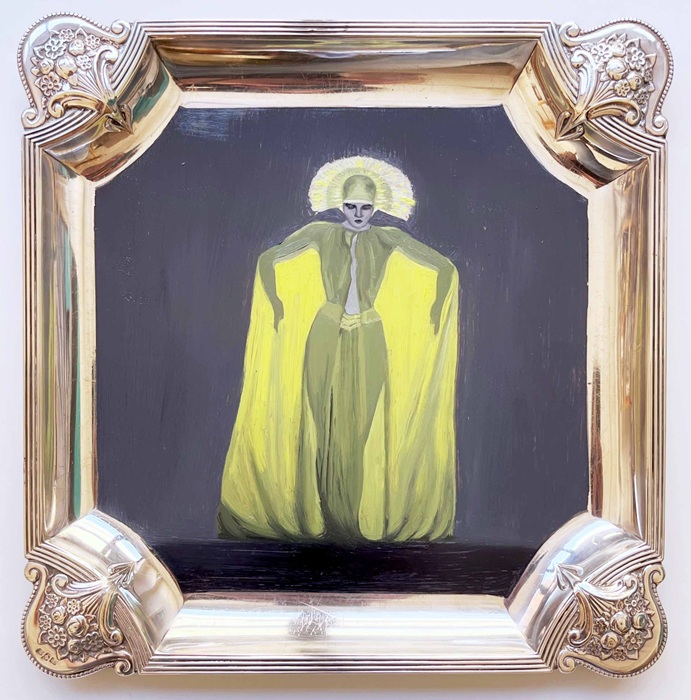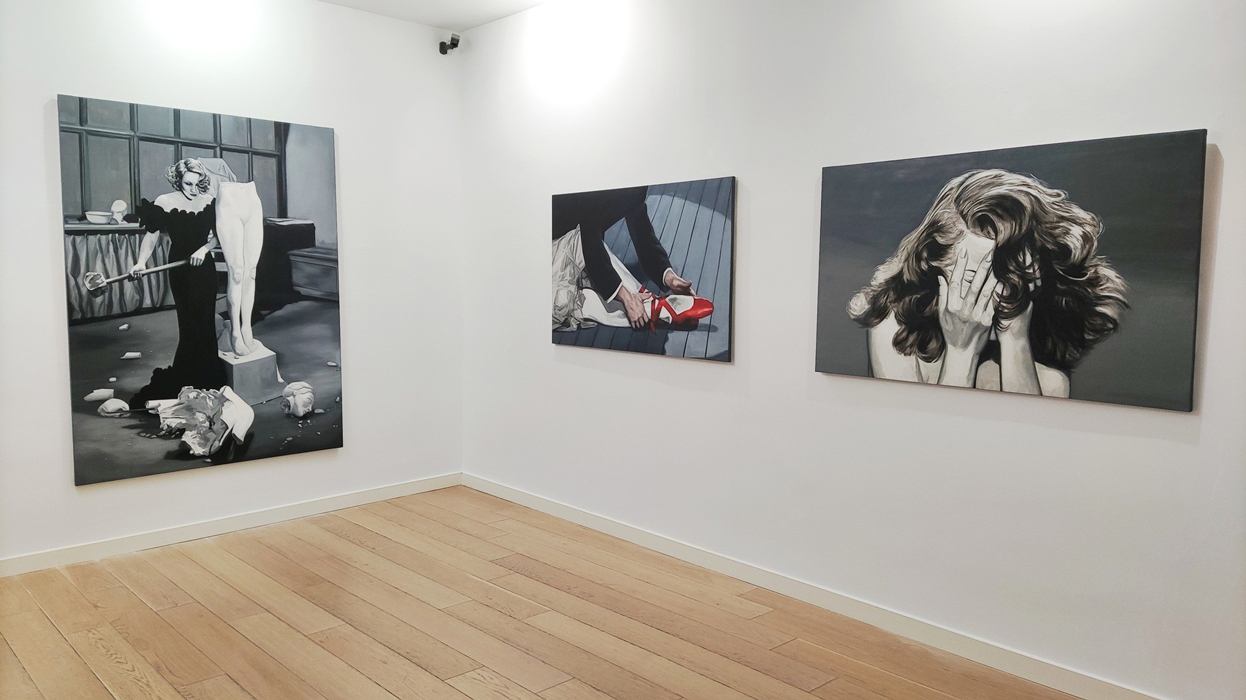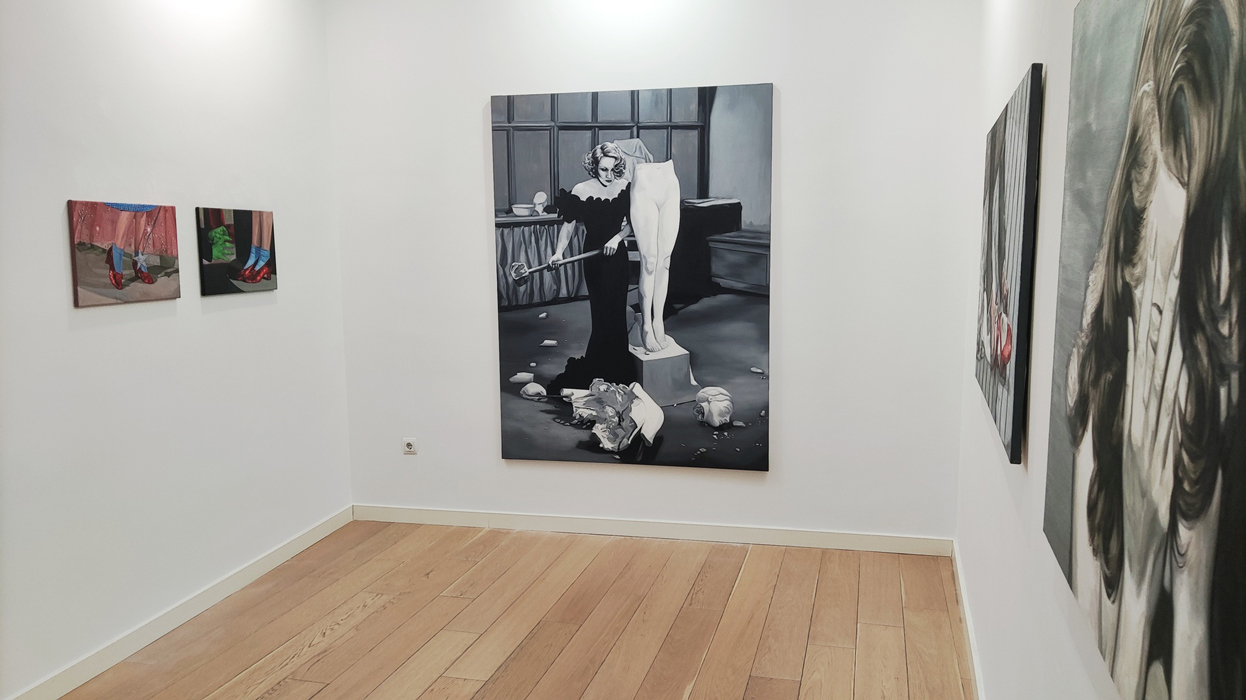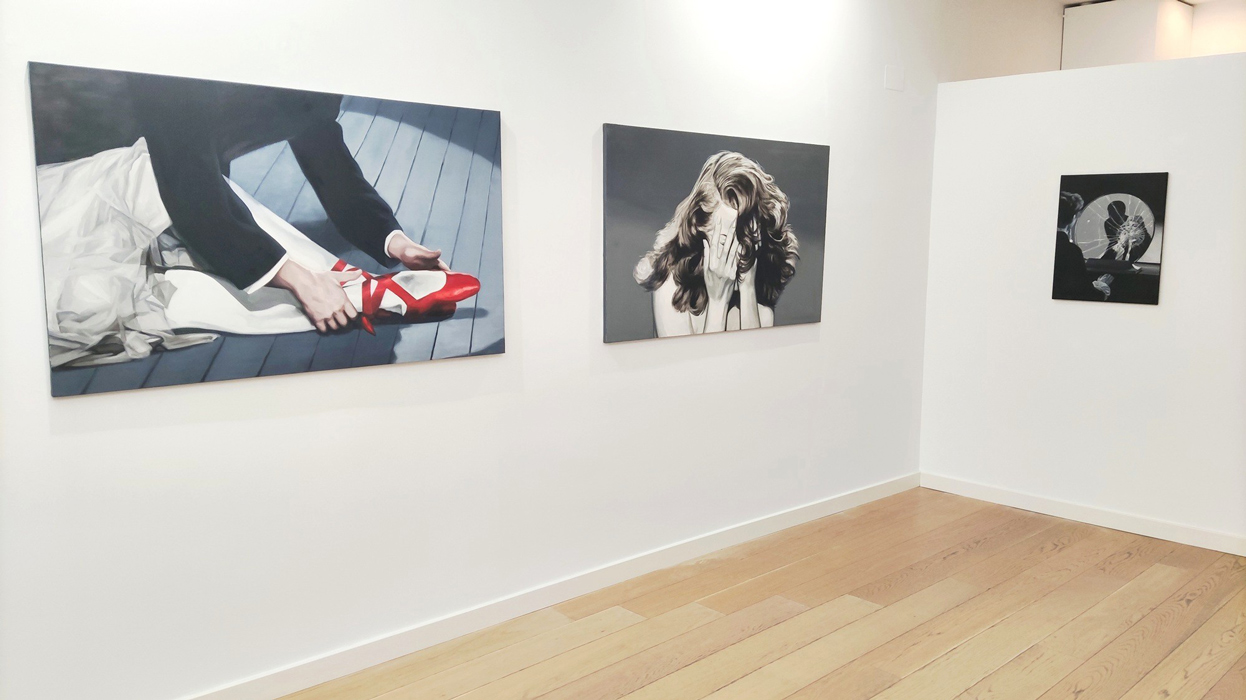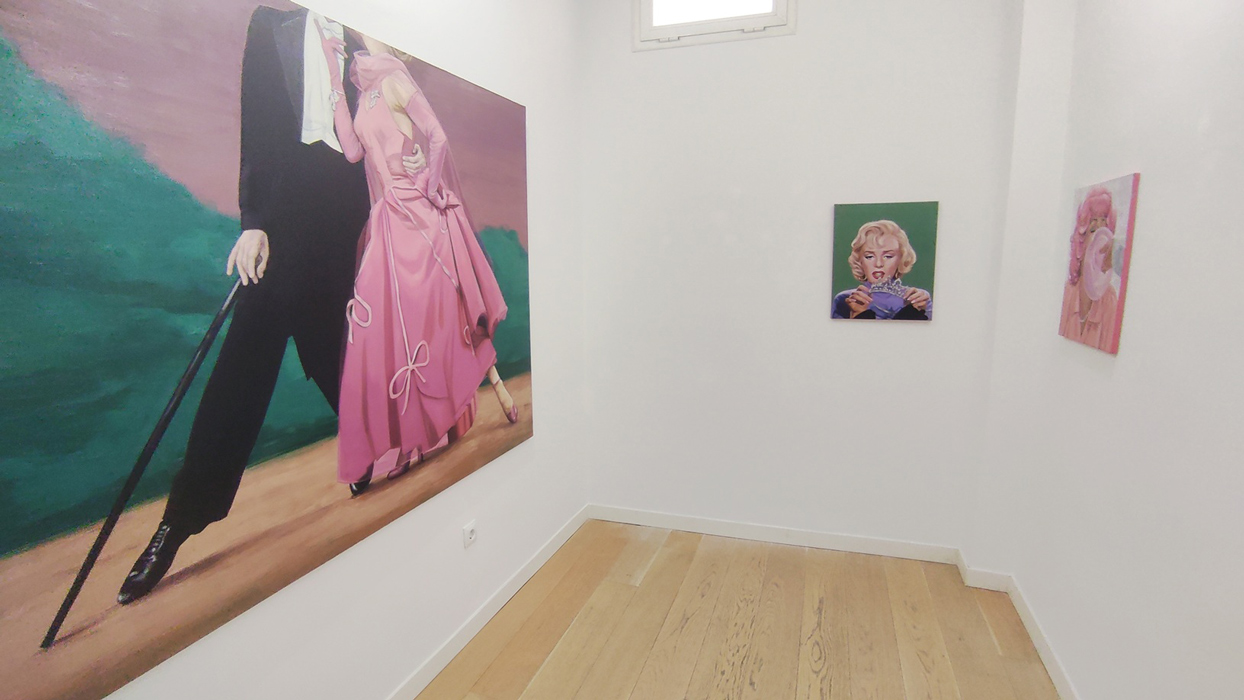
Cristina Toledo (Las Palmas de Gran Canaria, Spain, 1986) has been researching the role of women in different eras and media, such as cinema, for some time. For example, in her work for the publishing house Los Doscientos entitled “Cinema Paradiso”, a tribute to Giuseppe Tornatore‘s 1988 film of the same name. This film is an ode to cinema, and in its final scene, we see the protagonist in a theater watching a montage made from numerous romantic scenes from different films that had been censored when he was a child. Cristina transforms two hundred frames from classic films that appear in this final scene into painting. This artist’s book thus becomes the seed of this new project.
This time, Cristina collects and reinterprets the roles of legendary actresses from Hollywood’s Golden Age, such as Marilyn Monroe, Marlene Dietrich, Rita Hayworth, Ingrid Bergman, and Moira Shearer, who remain very much alive in the collective imagination but who demand a new perspective and critical vision.
Curator and art critic Natalia Alonso Arduengo provides us with some insights into a project that explores the representation of women in 20th-century cinema:
“In the end, femme fatales are only fatal to themselves,” says Silvia Plath, addressing the audience in Jorge Volpi‘s play ‘Las agujas dementes’. In this exhibition by Cristina Toledo, the mirror that shows a beautiful, enigmatic, and seductive woman becomes the movie screen, reflecting the stereotype of the femme fatale. Norma Jeane (Marilyn Monroe) is guilty of the Trojan War, like Helen. Anne Carson is clear about this. The female icons of Hollywood cinema, always portrayed from a male perspective, require new ways of being thought beyond the eternal feminine. The poet proclaims that ‘’we must make a 180-degree turn to find different and deeper pains there’’, we must create a political space and time through feminist action that unravels the knot of inherited behavioral patterns established as law.
We have been narrated and filmed according to a kaleidoscope of archetypes that oscillate like a pendulum between the condition of victim and executioner. Mary Jo Bang, in a few verses: ‘‘Every image of a woman speaks of a theatrical body / performing a script, the connector that carries / everything when there is war, and that embroiders when / there isn’t. I can see that they, that is, we, are / destined to be objects’’. Witches, vamps, ‘’Delilas’’ subjugating through sexual attraction, perverse, malignant, capricious, unfaithful… Or quite the opposite: fragile, submissive, silent, sweet, and delicate women. It is the dichotomy of a consolidated imaginary.
‘‘If I were a ranch, they would call me ‘No Man’s Land.’’’ Gilda is guilty. Her independence and eroticism provoke the dramatic conflict. The same year as the film, 1946, a nuclear test was carried out on Bikini Atoll, and the Able bomb was popularly nicknamed ‘’Gilda’’ after Rita Hayworth’s character. The level of danger attributed to a woman was equated to that of an atomic bombing. During that test, called Operation Crossroads, a second test, Baker, known as ‘‘Helen of Bikini’’, was conducted. Yet another Helen causing disaster. Evil has a woman’s name.
A couple of years earlier, in 1944, Gaslight, Georges Cukor’s film in which Ingrid Bergman plays a woman manipulated by her husband, who makes her believe she is going insane, was released. Film historian José Luis Sánchez Noriega points out in an essay on film noir that the actress ‘’had to demand, even to the point of tears, that producer Selznick include her name in the credits with the same prominence as Charles Boyer’s (her co-star)’’. Bergman, doubly a victim, in reality and in fiction. In neither life is there any escape from the role. Cristina Toledo transfers stills from Hollywood films to the canvas with the aim of generating a new perspective. The old answers are no longer sufficient for the new questions. She urges us to break free from the autopilot of unquestioning acceptance and to activate self-awareness. Vivian Gornick defines this concept as ‘’the feminist practice of examining one’s own personal experience from the perspective of machismo, the theory that explains the subordinate position of women in society as a result of the cultural decision to confer direct power on men and indirect power on women’’. While the system shouts at you to be feminine and smile, the artist seeks to deactivate sins (Norma Jeane is not to blame) and set in motion the mechanism of self-awareness that will drive us to be our own masters so that no one tells our story for us.”
Curated by Natalia Alonso Arduengo and Juan Curto.In order to receive the press kit (press release and images) please contact us on (+34) 91 429 17 34 or e-mail info@camaraoscura.net
Contact us for availability and price of the artworks on (+34) 91 429 17 34 or e-mail juan@camaraoscura.net
Activity subsidised by the Ministry of Culture of Spain.